PayPal: onboarding

MY ROLE:
I worked with all stakeholders. The main goal is to ensure that we return dormant users
(of 30, 60 and 90 days) to reactivate.
TEAM:
Lead designer \ PM \ Engineering
TIMELINE:
8 hours
OUTCOME:
Designed a re-engagement experience that allowed users to return at any time and complete the sign-up process without restarting, helping reduce onboarding abandonment.
OPPORTUNITY:
This project was for users to keep their place through the on-boarding system. As well, if we had dormant users, they could come back at any time to finish the sign-up process. The goal was to help streamline the on-boarding process.
DISCOVERY:
Many new users began the onboarding process but failed to complete critical activation steps such as linking a debit card or confirming their phone number. Once users abandoned onboarding, there was no simple way for them to return and continue where they left off, resulting in lost activations and dormant accounts.
STRATEGY:
Working with stakeholders and our research team, we found that our users dropped out too early. The research showed in the past they would drop in the first 30 days and then had no way to go back to complete their on-boarding process.
KEY DECISIONS:
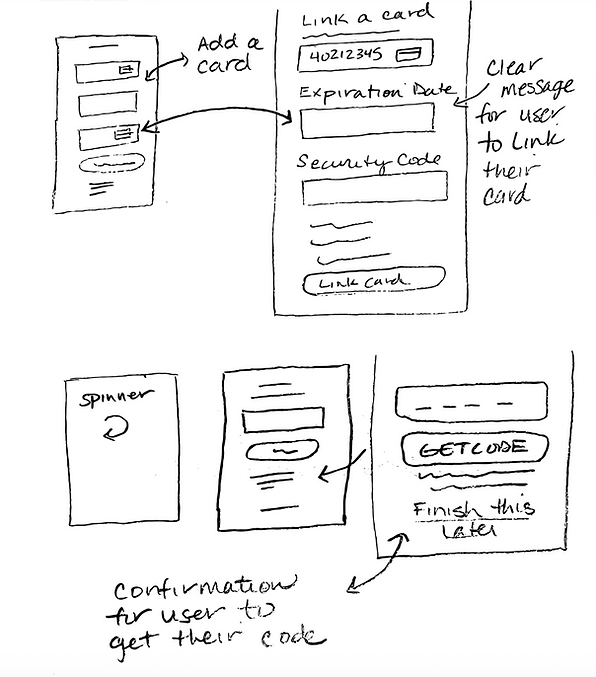
• Signing for user
• A screen for users who need complete their onboarding experience if they abandon the process
• A user can link 'Add Card' or 'Confirm Phone'
• Checkbox for user to get reminder email later
• User can add a card
• Confirming mobile number by getting a code
• User could finish this later and get an email reminder
ONBOARDING:
This showed a new flow for the user that might abandon the flow, so they could return at any time to finish the on-boarding flow.


CONFIRMATION SCREENS:
A user can link their card or phone number if they stop the on-boarding process when they sign up. They will receive a reminder email to continue the on-boarding process.

CRAFTING THE EXPERIENCE:
Designed a recovery flow that enabled users to pause onboarding and seamlessly return later through email reminders, preserving their progress and reducing the likelihood of abandonment.
REVISED VERSION: MOBILE VIEW:
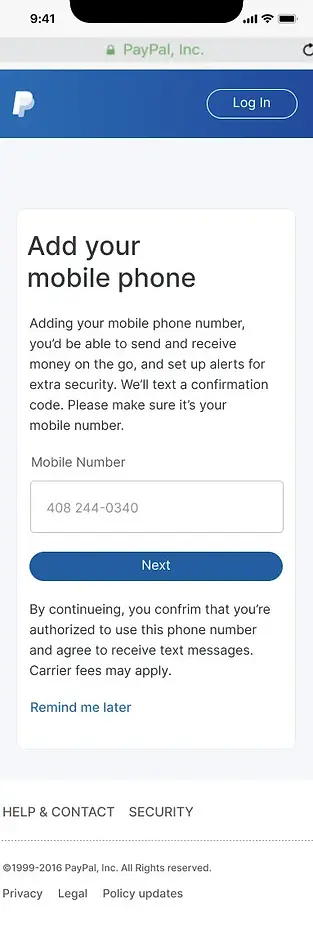
I designed a flow so that if the user did not want to finish the on-boarding flow, they had a way to return as an email reminder to set up their credit card and confirm their mobile phone.



DESKTOP:
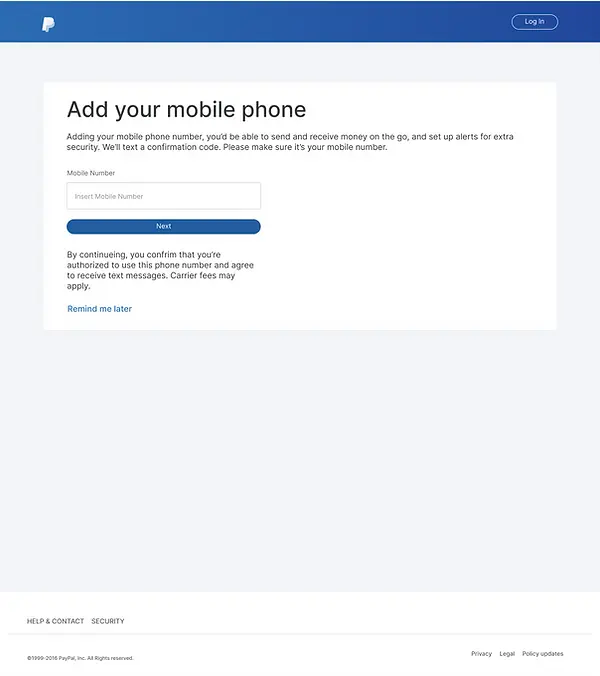
I designed the desktop onboarding experience to support users who were not ready to complete setup in one session. By providing a clear way to save their progress and return later through an email reminder, users could securely finish adding their payment method and confirming their mobile phone without having to restart the process.

PROTOTYPE:
Conducted 10 user interviews to better understand onboarding abandonment and identify opportunities to improve the experience. Research insights informed a redesigned onboarding flow that allowed users to save their progress, return at any time, and receive SMS reminders reducing friction and helping customers complete their applications without restarting the process.
OUTCOME & IMPACT:
We found that using text messages to remind users to return to the workflow was an accepted and preferred solution to nudge them to finish steps when they had time.
REFFECTION:
Our main goal was to ensure users could return at any time to complete their onboarding process. Given more time, I would have conducted additional usability testing to validate the flow, identify points of friction, and continue refining the experience based on real user behavior.